
Advocacy and Resources: Community cats deserve better, and it starts with how we see them

Table of Contents
Community cats deserve better, and it starts with how we see them
There is a cat in someone’s backyard right now. Maybe yours. Maybe your neighbor’s. She’s been there for weeks, possibly months. People have noticed her. Most of them have kept walking.
That’s not cruelty. It’s just what happens when we don’t know what we’re looking at.
Conan, a diluted tortoiseshell, was confident in her territory, yet cautious around me. I didn’t know what she was at first; stray, lost pet, feral. I didn’t know the difference and I didn’t know it mattered. Over the next 43 days I learned that it matters enormously. Not just for the cat, but for how you respond, what you do, and what you’re actually capable of when you stop walking past.
This section of the site exists because of what I saw when I started paying attention. And because the gap between how most people see community cats and what those cats actually need is wider than it should be.
What a community cat actually is
Community cats are not strays in the lost-pet sense and they are not feral in the completely-unsocialized sense. They occupy a middle ground that most people don’t have a word for, which is part of why they get misread so consistently.
A community cat is an outdoor cat who has established a territory, a block, a yard, a neighborhood, and often has informal relationships with the humans in that space. They’ve had enough contact with people to be approachable, but they don’t have an owner and they don’t have a home in the conventional sense. The neighborhood is their home. The people in it are part of their world whether those people chose that or not.
Conan was a community cat. She claimed our entire backyard as hers long before I understood what that meant. She had a routine, preferences, a clear sense of what was safe and what wasn’t. She wasn’t waiting to be rescued. She was living her life in the territory she had chosen, and when I showed up consistently she made a calculated decision to include me in it.
That’s different from a lost pet looking for a way home. It’s different from a feral cat who will never willingly approach a human. It’s its own thing and it deserves its own response.

The difference between community and feral, and why it changes everything
Feral cats are born outdoors with little to no human contact during the critical socialization window in kittenhood. By the time that window closes, they’ve learned that humans are not safe. That’s not a personality trait; it’s a survival adaptation. You can’t undo it with patience and wet food. Feral cats are generally not candidates for indoor adoption and the most humane path for them is usually TNR, trap-neuter-return, which stabilizes their population and lets them live out their lives in their territory without contributing to further overpopulation.
Community cats are different. They’ve been socialized to humans at some point; either they were born to a socialized mother, had early human contact, or were once owned and then abandoned or lost. They’re approachable. They communicate. They form attachments. Conan asked me for help twice when her kittens were inaccessible, came to find me, vocalized, led me back to the problem. That’s not feral behavior. That’s a cat who has learned that humans can be useful and has decided I was one worth trusting.
The distinction matters because it determines what’s actually possible. A community cat can be TNR’d, fostered, and in many cases adopted. A feral cat generally cannot. Treating them the same way, either ignoring both or trying to force both into indoor life, gets the outcome wrong in both directions.
What indifference actually costs
Most people who walk past a community cat aren’t making a conscious decision to do nothing. They’re just not making a decision at all. The cat is there, it’s always been there, someone else will handle it, it’s probably fine.
But indifference has a cost that compounds quietly.
An unspayed community cat can have two to three litters per year. Each litter averages four to six kittens. Without intervention, TNR, rescue, adoption, that one cat becomes a colony. A colony without management becomes a welfare problem for the cats and a conflict point for the neighborhood.
Conan gave birth to six kittens on February 28, 2026. If she had gone unnoticed, or if I had decided it wasn’t my problem, those six kittens would have been born without any human support, without socialization during the critical window, and without a path to rescue. The odds for all of them would have been significantly worse.
Nobody asked me to care. I just decided to.
What TNR is and why it matters
Trap-Neuter-Return is the most humane and effective approach to managing community cat populations. A cat is humanely trapped, spayed or neutered by a vet, and returned to their territory. The surgery also typically includes an ear tip, a small removal of the tip of one ear that identifies the cat as TNR’d so they’re never trapped and processed again unnecessarily.
TNR works because it stabilizes the population at the source. Removing cats from a territory doesn’t solve the problem; new cats move in to fill the vacuum. Neutering the existing cats stops reproduction while letting the colony live out its natural lifespan in familiar territory.
It’s not a perfect solution for every situation. A pregnant community cat who has already given birth, like Conan, has a different and more urgent set of needs. But as a long-term management strategy for community cat populations, TNR is what the evidence supports and what most reputable rescues recommend.
If you have community cats in your area and you want to do something sustainable, finding your local TNR program is the right first call.
What happened when one person decided to pay attention
I am not an animal rescue professional. I had zero prior pet experience before February 10th. I didn’t know the difference between a community cat and a feral cat. I didn’t know what to feed a pregnant cat, how to read kitten development milestones, or how to navigate the rescue system.
What I had was a willingness to show up every day and figure it out.
Over 43 days, Conan and I built something that I still don’t have a clean word for. She let me handle her kittens. She slept near my feet. She asked me for help. Six kittens were born, socialized during the critical window, and transferred to a foster-based rescue in San Diego at 25 days old; healthy, handleable, and with a real shot at adoption.
None of that required expertise. It required consistency, attention, and a decision not to walk past.
Advocacy and Resources: What this section of the site is for
The articles here are about changing how we see community cats, and by extension, how we respond to them. That includes understanding the difference between community and feral, knowing what TNR is and how to access it, understanding why shelter isn’t always the right answer, and recognizing that doing nothing is still a choice with real consequences.
This is not about guilt. Most people who walk past a community cat aren’t bad people. They just haven’t had a reason to look more closely.
Conan gave me a reason. These articles are what I learned when I did.
None of that required expertise. It required consistency, attention, and a decision not to walk past.

Fundraising for a community cat (and how to advocate for them)
After Conan’s litter was born, it was clear that “figuring it out” had a real dollar figure attached to it. Let’s deep dive in fundraising for a community cat.
Read Article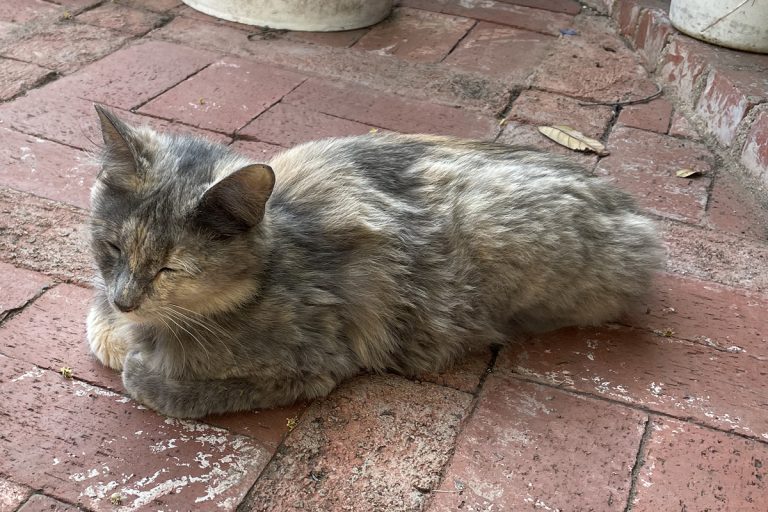
When a cat rescue shames you for asking for help
When a cat rescue shames you for asking for help, that’s about them, not you. Here’s what happened to me and what I did next.
Read Article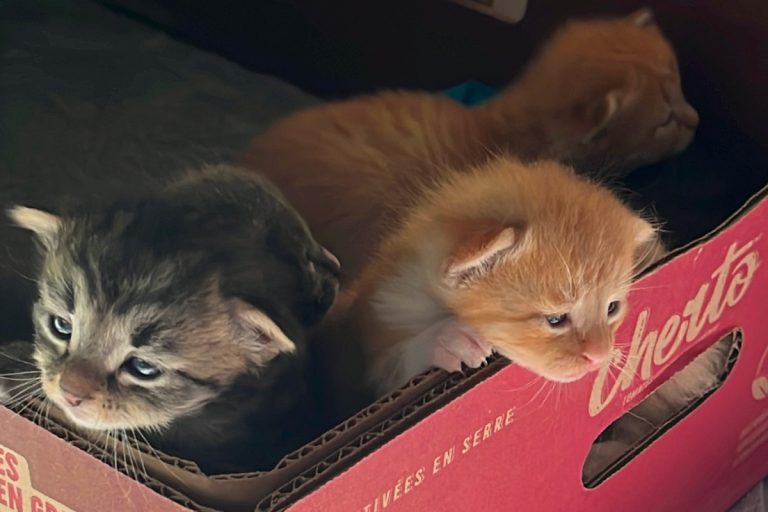
How to create a profile for a community cat or kitten
This is how you create a profile for a community cat or kitten. Let’s deep dive.
Read Article
Why giving free kittens away is not safe (and what happens when they land in the wrong hands)
Sadly, we do not live in a world where we all treat our pets and animals with love and affection. Here’s why giving free kittens away is not safe.
Read Article
Understanding the responsibilities and obligations to feed the community cat
You see a cute community cat in passing. Do you let it walk or feed it? Deep dive in understanding the obligations to feed a community cat.
Read Article