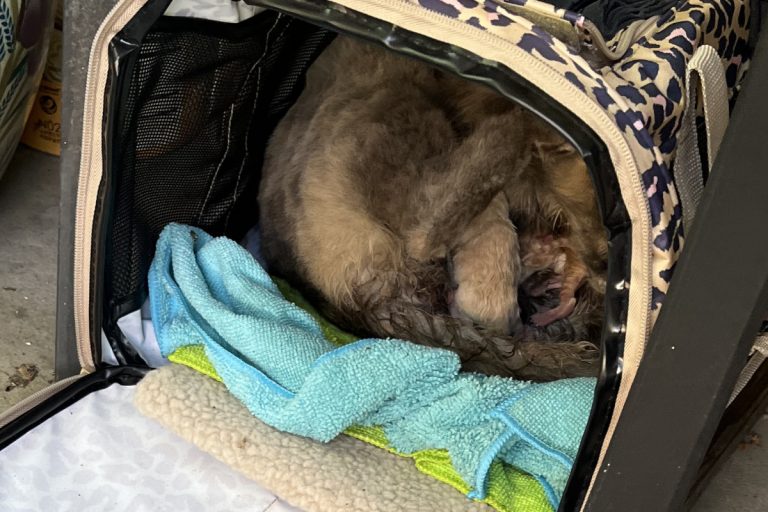
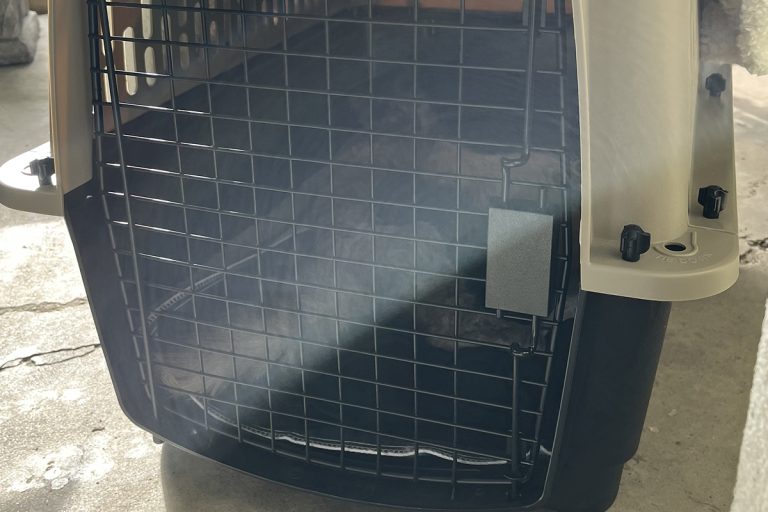
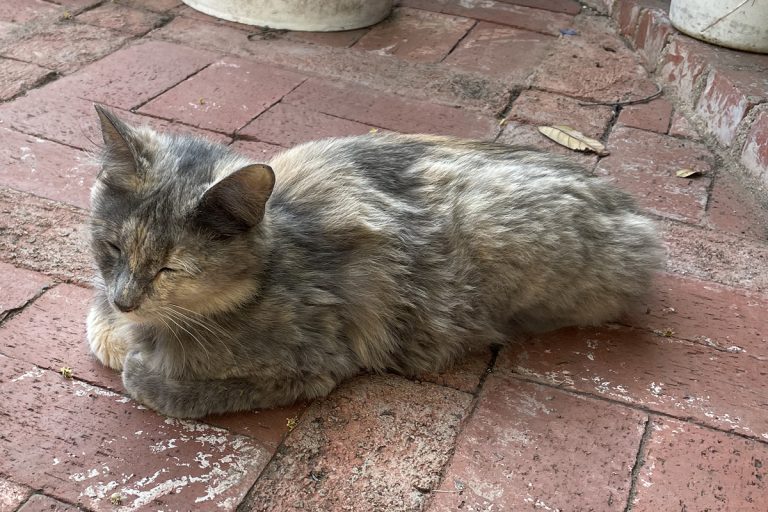
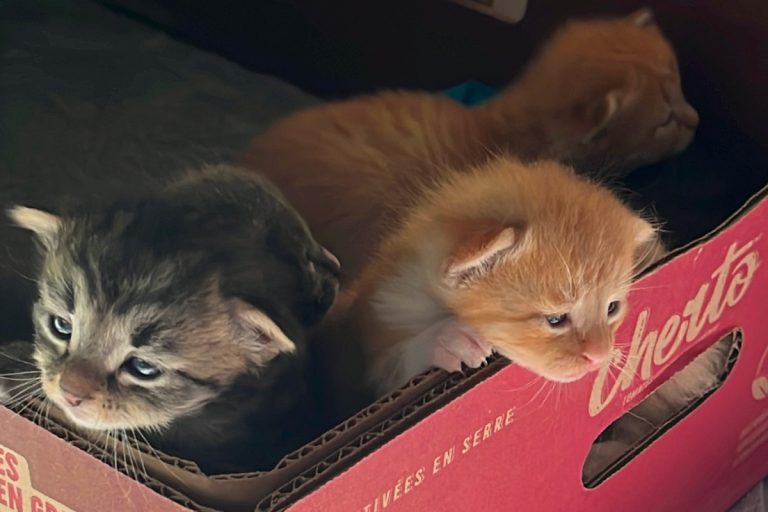
After Conan’s litter was born, it was clear that “figuring it out on my own” had a real dollar figure attached to it, and that figure was growing. Premium wet food, wetting pads, bedding, carriers, and other cat supplies I didn’t know I’d need until I needed them. Over 43 days I spent over $700 out of pocket, during a period of genuine financial hardship.
What I didn’t expect was how willing people were to help once I asked. The community that formed around my story raised over $300—people who had never met her bought food, sent supplies, showed up. Every dollar that remained after the transfer went directly to any rescue that was going to rescue the cat family.
If you’re in a similar situation, here’s what actually works and what to watch out for.
Before you ask for anything: be specific
Vague requests get vague responses. “Any help is appreciated” is easy to scroll past. A specific ask with a specific reason is a concrete problem people can actually solve.
Instead of “I need help with cat supplies,” try: “I’m caring for a mama cat and six newborn kittens. I need to cover food for the next two weeks while I find a rescue. I’m looking to raise $150.”
Specific dollar amount. Specific reason. Specific timeline. That combination converts far better than a general appeal.
Amazon wishlist: the easiest tool for supplies
An Amazon wishlist is one of the most underrated fundraising tools for this kind of situation because it removes all friction for the person who wants to help. They don’t have to figure out what to buy, where to ship it, or whether you need it. They just click and it arrives.
Set up a public wishlist (*note this one’s on private since Conan and her kittens are at the rescue*) with exactly what you need: the specific wet food brand and flavors (Conan’s were very specific, wrong formula and she’d walk away), wetting pads, bedding, carriers, whatever applies.
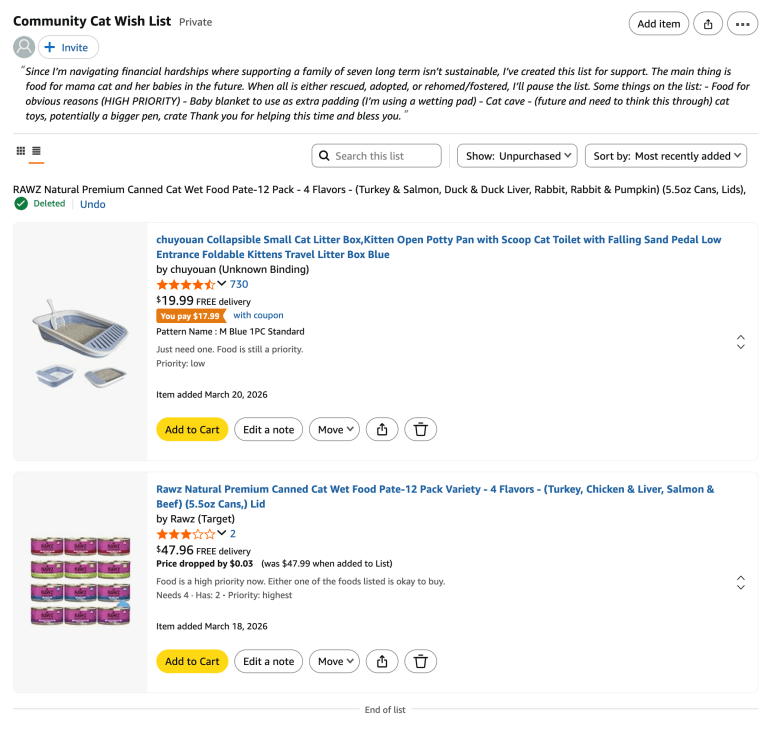
A few tips: keep the list updated as items arrive so people don’t send duplicates. Add a note on each item explaining why it’s on the list; “nursing mama needs high-protein wet food, no gums or carrageenan” tells people why it matters and makes the ask feel real rather than generic.
You can attach your former wishlist image here as a visual example for readers.
Venmo and PayPal: direct cash, different caveats
Venmo is the simplest for most people in the US. It’s familiar, fast, and has no fees for personal transactions paid from a bank account or Venmo balance. If someone pays with a credit card there’s a small fee on their end. For casual community fundraising this is often the easiest option.
PayPal works similarly but has more fee structures to be aware of. Personal payments between friends are generally free, but if you set up a donation button or receive payments through PayPal Goods & Services, PayPal takes a percentage. For amounts under a few hundred dollars this can add up meaningfully. If you’re using PayPal, send people your personal payment link rather than a business link to minimize fees.
Both platforms: be transparent about what the money is for and what happens to anything remaining. When the situation resolved, I was clear that remaining funds went directly to TKC. That transparency is what makes it possible to ask in the first place.
GoFundMe: more reach, more fees
GoFundMe is worth considering if you need to raise a larger amount or reach people beyond your existing audience. It has built-in discoverability and people are comfortable donating through it.
The tradeoff is fees. GoFundMe takes a platform percentage plus payment processing fees on every donation. For smaller campaigns the fees can feel significant relative to what you’re raising. Read the current fee structure before you set one up; it changes periodically.
GoFundMe also works best when you have a compelling story with photos and regular updates. A campaign that goes quiet after the initial post loses momentum fast. If you use it, commit to updating it every few days so donors feel connected to the outcome.
One important thing if you plan to pass funds to a rescue
Be upfront about this before you start. If you’re collecting money with the intent to donate remaining funds to a rescue, say that clearly in your posts, your campaign description, and again when the situation resolves.
You should never collect money yourself and pass it along without that transparency. And direct people to donate straight to the rescue when possible; it’s cleaner legally and builds trust with your audience.
Tap your local community too
Nextdoor, local Facebook groups, community cat networks. People in your immediate area have a different connection to a situation in a local backyard than strangers online do. Local rescues and TNR groups sometimes have food banks or supply donations available for exactly this kind of situation; it’s worth asking before assuming you have to cover everything yourself.
Takeaway: Fundraising for a community cat
What worked for me was simple: honest posts on social media showing the situation in real time, a specific ask, a payment link, and consistent updates on how the family was doing. People showed up because they could see it was real and they knew exactly where their help was going.
You don’t need a polished campaign. You need a real situation and a clear ask. People respond to both.