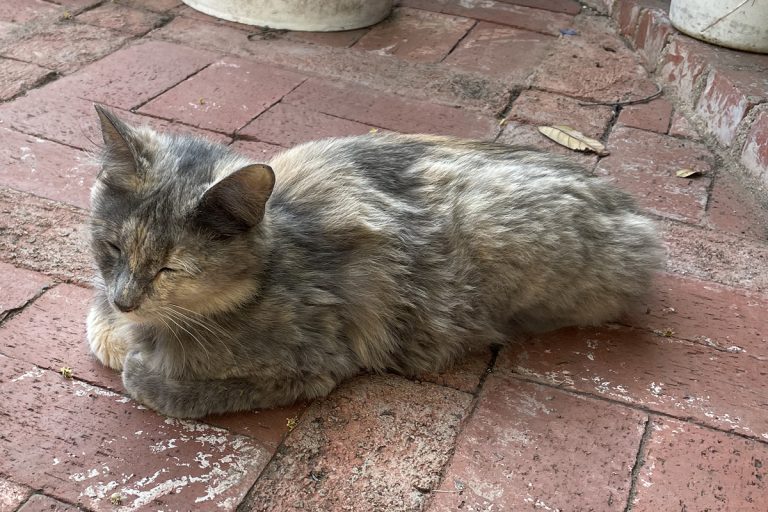
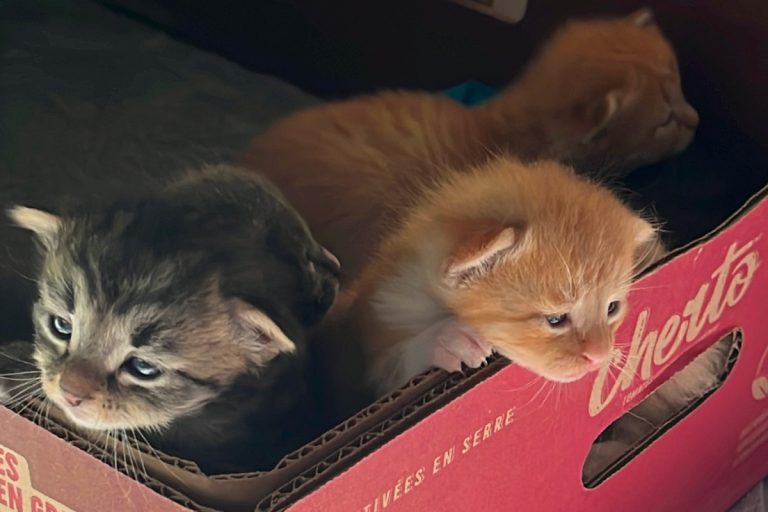
When Conan showed up in our backyard I didn’t know what to call her, let alone what I wanted to name her. I used the word stray or stray cat because that’s the word I had. It took weeks of paying attention, and some gentle correction from people who knew more than I did, before I understood why the label mattered.
She wasn’t a stray. She was a community cat. And the difference between community cat vs feral cat changed everything about how I understood her, what she needed, and what was actually possible for her future.
Three categories most people collapse into one
Most people think about outdoor cats in two categories: owned or not owned. If a cat has a home, it belongs there. If it doesn’t, it’s a stray and someone should probably do something about it.
The reality is more specific than that, and the specificity matters.
Owned cats
Cats with a home, a person, regular veterinary care. They may go outside but they have a fixed point to return to. If an owned cat is found wandering, the goal is reunion with their owner.
Community cats
Outdoor cats who live within a specific territory, a street, a block, a backyard, and have often formed informal relationships with the people in that space. They’ve had enough human contact at some point to be approachable, but they don’t have an owner and they don’t have a home in the conventional sense. Their neighborhood is their home.
Community cats may have once been owned and then lost or abandoned. They may have been born to a socialized mother who taught them that humans were non-threatening. They may have been loosely cared for by multiple people in a neighborhood without any single person claiming them. The common thread is socialization; they’ve learned that people can be part of their world.
Feral cats
Cats born outdoors with little to no human contact during the critical socialization window, roughly weeks two through seven. By the time that window closes, a cat who hasn’t had positive human contact will have categorized people as a threat. That’s not a personality flaw. It’s a survival adaptation built into the first weeks of their life.
Feral cats are generally not candidates for indoor adoption. They haven’t learned that humans are safe and that lesson, missed at the right developmental moment, is very difficult to teach later. The most humane path for truly feral cats is usually TNR, trap-neuter-return, which allows them to live out their lives in their territory without contributing to population growth.
Community cat vs feral cat: Why Conan was not feral
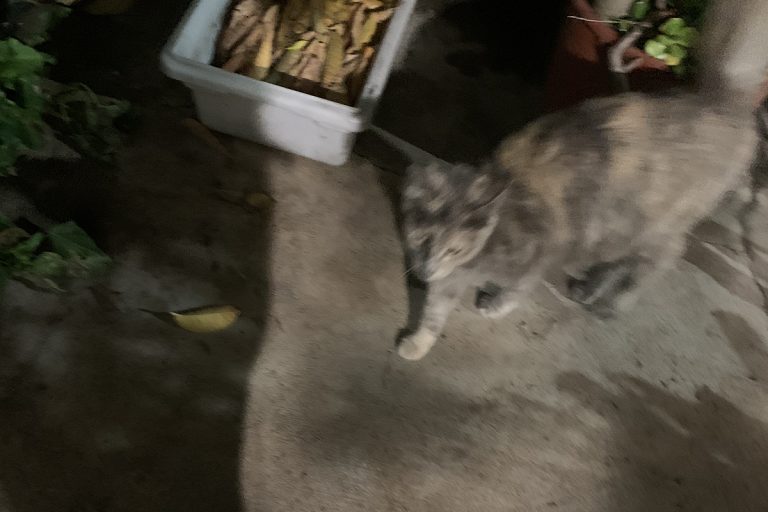
Don’t get me wrong! Conan was cautious of me in the beginning. She kept her distance, assessed me from a couple feet away, and decided whether I was worth the risk before committing to any interaction. Someone who didn’t know the distinction might have read that as feral, a cat who doesn’t want human contact.
But caution is not the same as fear. And wariness is not the same as unsocialized.
She made eye contact.
She didn’t bolt.
She communicated, through body language, vocalization, behavior, in ways that assumed I was capable of understanding her.
She figure-eighted around my legs immediately after meeting me.
She leaned into me when she wanted contact.
She asked me for help twice when her kittens were inaccessible.
She slept near my feet.
A feral cat does none of these things. A feral cat treats humans as predators to be avoided. Conan treated me as a something she needed to assess, and once she had assessed me and found me acceptable, she included me in her world fully and on her own terms.
That’s community cat behavior. That’s socialization at work, even if it moved slowly.
Why the distinction changes what’s possible
This is the part that matters most practically.
A feral cat cannot realistically be transitioned to indoor life in most cases. Attempting it causes significant stress to the animal and rarely results in a genuinely comfortable indoor cat. The intervention that helps a feral cat is TNR; stabilizing their health and preventing reproduction while allowing them to remain in the territory they know.
A community cat can be TNR’d, fostered, and in many cases adopted into an indoor home. The socialization is already there. It may need time, patience, and the right environment; a community cat who has lived outdoors will need an adjustment period, but the fundamental piece, the piece that makes indoor life possible, exists. They know that humans can be safe.
What this means when you find a cat in your yard
The first question worth asking when an unfamiliar cat shows up is not “is this cat lost?” or “is this cat feral?” It’s: how does this cat respond to my presence?
Does it make eye contact? Does it hold its ground rather than immediately fleeing? Does it approach, even hesitantly? Does it vocalize in a way that seems directed at you?
Those are signs of socialization. That’s a cat who has been around humans enough to have an opinion about them, and might be willing to revise that opinion if you give it time and consistency.
A cat that runs immediately and won’t slow down regardless of what you do is giving you different information. That cat may be feral, or may be an owned cat who is frightened and disoriented. Either way, your approach is different.
The label isn’t academic. It determines what intervention is appropriate, what the realistic outcomes are, and how you spend the limited time and resources you have to help.
Conan showed me that a community cat who is cautious is not a community cat who is lost. She just needed time to decide I was worth trusting. That’s a decision she was always capable of making. She just needed someone to wait for it.