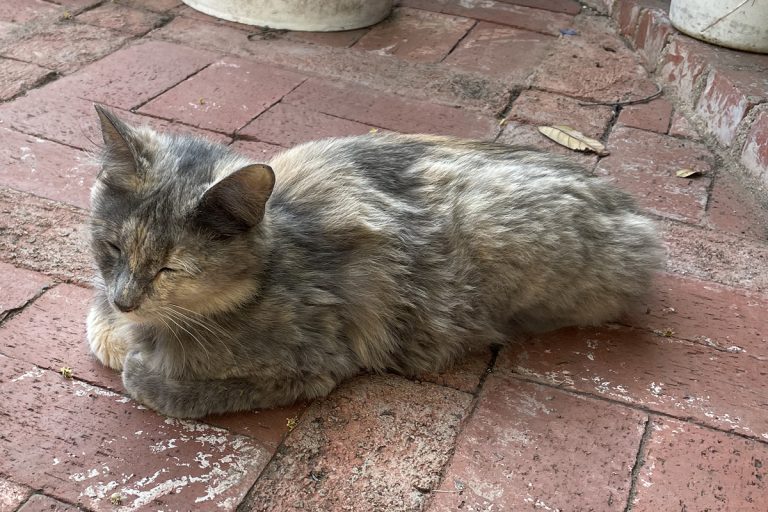
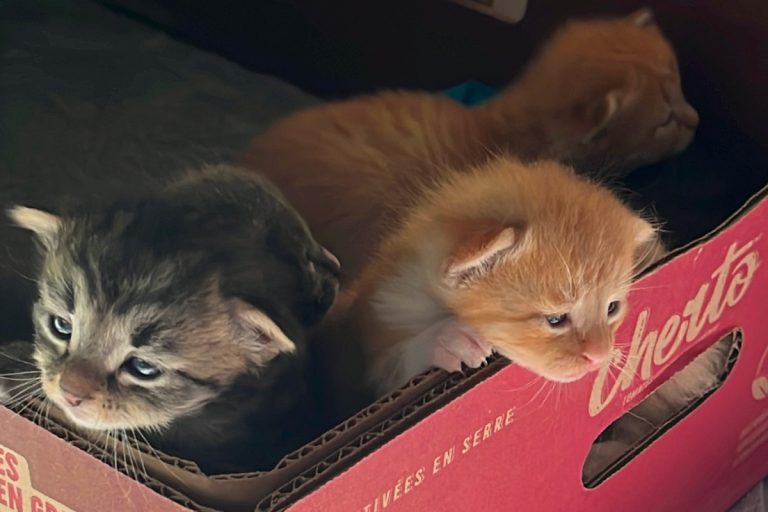
I knew the transfer was coming in less than a week. I had time to prepare and organize. Though, I was not entirely prepared.
Not because anything went wrong; everything went right.
Conan and her six kittens transferred safely to the rescue I chose. They were already ready. The logistics were handled. By every practical measure, it was a smooth handoff.
What I wasn’t fully prepared for was what it felt like to hand over animals I had been showing up for every day for 43 days. And what I definitely wasn’t prepared to think about was what it felt like for Conan.
Both of those things deserve attention.
The practical side to transferring a cat to a rescue: what to expect logistically
Confirm everything in writing before the day of transfer. Where you’re going or who is coming to you, what time, what you need to bring, what car. Rescues are busy and details can slip. A quick confirmation message the day before keeps everyone on the same page.
Two days before the handoff, I contacted their transport still hesitate that all was a trick. I kept the initial text really brief, until they indirectly confirmed the location and time.
Bring everything and send everything you know.
This sounds vague but it matters enormously. Everything you’ve observed about the mama cat’s behavior, food preferences, fears, and communication style. Everything you know about each kitten’s temperament, how they respond to handling, who plays with whom. Any health observations; anything that seemed off and then resolved, any dietary patterns, anything the rescue might need to know to provide good care from day one.
I kept profile documents for Conan and all six kittens throughout the 43 days. Those documents went with them. The foster family didn’t have to start from scratch because I had written it all down.
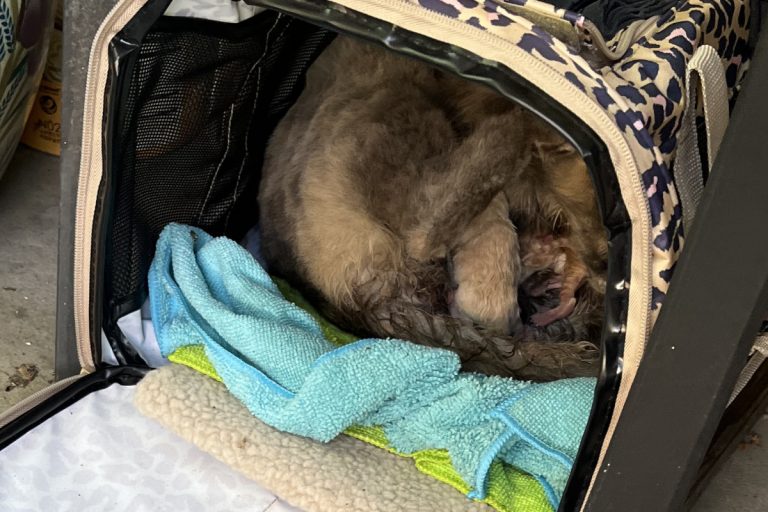
Bring something familiar to the cat or cat family if you can, or at minimum something with familiar scent. Conan had lived in a carrier for weeks and a box. It was her territory. Since she and her babies outgrew that soft carrier, I let them have the box she nested in. Having it with her during transport and in the initial foster environment gave her something familiar to anchor to in an unfamiliar situation.
Pack her food. Not just as a nice gesture but practically; a mama cat who is stressed and in a new environment is more likely to eat something familiar. A rescue that’s doing everything right will still appreciate knowing exactly what she likes and what she refuses.
What the transfer is like for the mama cat
This is the part nobody talked to me about and the part I thought about the most afterward.
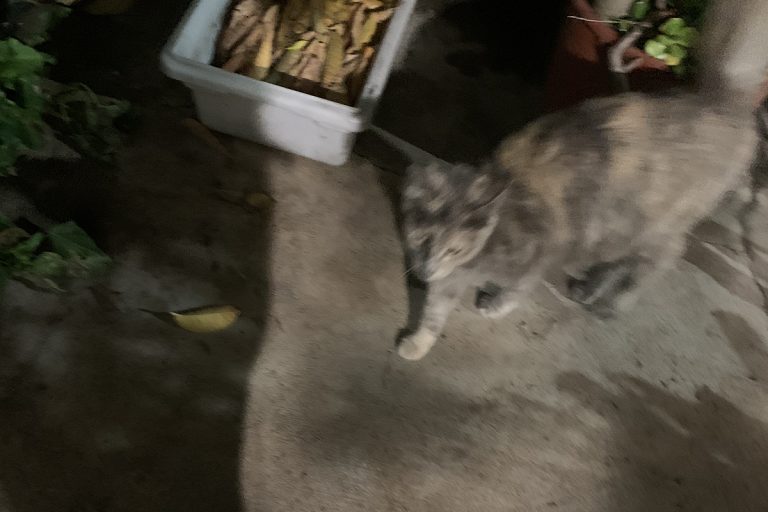
Conan had been in our backyard for over six weeks at the point of transfer. She had given birth there, raised her kittens there, established the feeding station as her territory. She knew the space. She knew me. She knew the routine.
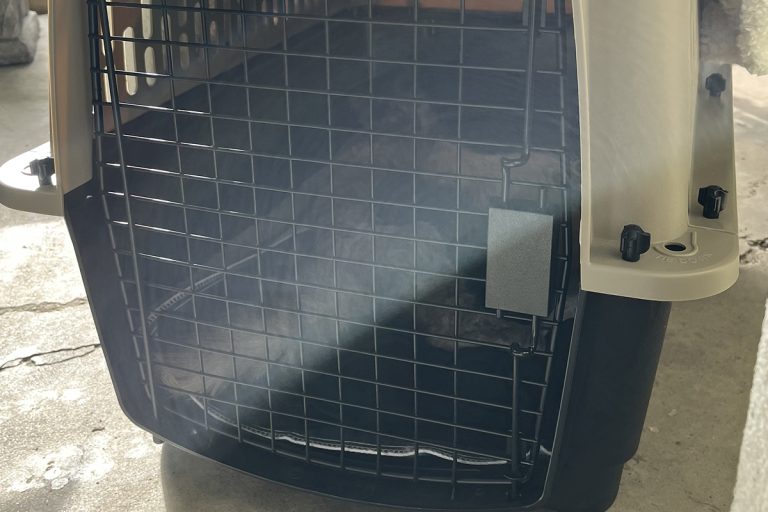
The carrier ride to San Diego was the furthest she had ever traveled. The foster home was entirely unfamiliar; new smells, new people, new sounds. She was in an enclosed space with six kittens who were increasingly mobile and demanding, in an environment she hadn’t chosen and couldn’t immediately read.
From my understanding, community cats and environmental change have a complicated relationship. A cat like Conan who has lived mostly outdoors and claimed a territory as her own doesn’t automatically transfer that sense of ownership to a new location. She has to rebuild it slowly, through repeated positive experience in the new space, through finding the safe spots and the food source and the human or humans who can be trusted.
What helps: a quiet introduction with minimal foot traffic and unfamiliar people. The carrier she knows as a safe retreat available to her in the new space. Familiar food. Consistent, calm human presence without overwhelming interaction. Time.
That is what the rescue has updated me on.
From my observation, Conan is an adaptable cat. She proved that over 43 days of adjusting to my presence, my routines, and my backyard. She had the capacity to adjust to something new. But I thought about that adjustment, and about what it cost her, for a long time after.
What the transfer is like for you
Harder than you expect, most likely. Even if you knew it was coming or the right outcome. It’s still hard for me to this day, admittedly.
The animals you’ve been caring for, especially a mama cat you’ve built a real relationship with, are not abstract to you by this point. You’ve learned her signals. You know what she likes and what she refuses. You’ve watched her give birth, nurse six kittens, ask you for help, fall asleep near your feet. That’s not nothing.
Handing that over to people who don’t know any of it yet, even excellent people or the right people, is a strange kind of loss. The situation is good. The outcome is good. And it’s still hard.
Give yourself permission to feel that. It doesn’t mean you made the wrong call. It means you did something real, and real things leave marks.
What made it easier
Writing everything down. Knowing that the knowledge I’d built didn’t disappear with the handoff; it traveled with them in the form of the profile documents. The foster family could read about Conan’s food preferences and her fear of loud noises and her helloooo response and they could use that to build trust with her faster than they would have otherwise.
Trusting the rescue. The rescue I chose specializes in exactly this situation. They have experience with community cats who need time to adjust, with neonatal kittens in the critical socialization window, with keeping families together when possible. The work I did for 43 days was real. The work they were about to do was also real, and they were equipped for it in ways I was not.
And staying connected to the outcome. Following the journey, continuing to document, knowing that the goal, all of them adopted into good homes, was still in front of us even if my direct role in it had changed.