
Kitten development week by week: what actually happens in the first 25 days
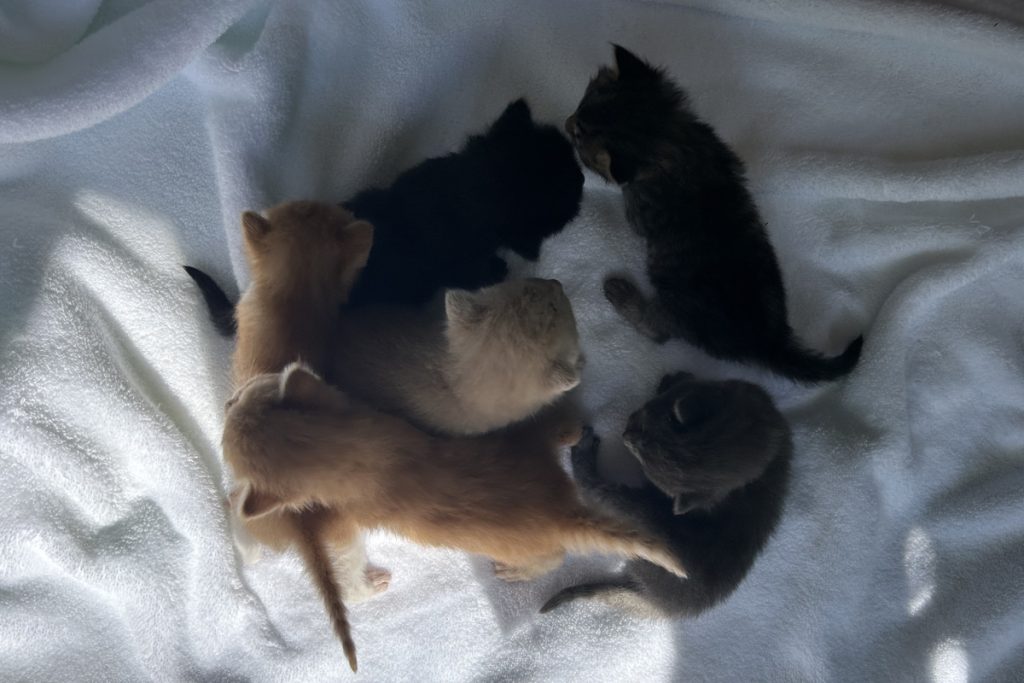
Table of Contents
I didn’t know what I was watching when it kitten development started. Six kittens were born in a carrier I accidentally set-up on February 28, 2026, in the morning Conan had chosen herself. I had no frame of reference for what newborn kittens looked like, what they needed, or what the next few weeks were going to involve. I just showed up every day and paid attention.
What I watched over those 25 days was a complete transformation, from six newborns who couldn’t see, hear, or regulate their own temperature, to six distinct personalities climbing the walls of their playpen and responding to my voice by name.
This is what that actually looked like, week by week.
Kitten development days 1 through 3: leave them alone
The instinct when you find a litter of newborn kittens is to do things. Check on them constantly, handle them, clean everything, make sure they’re okay.
The right instinct is almost the opposite.
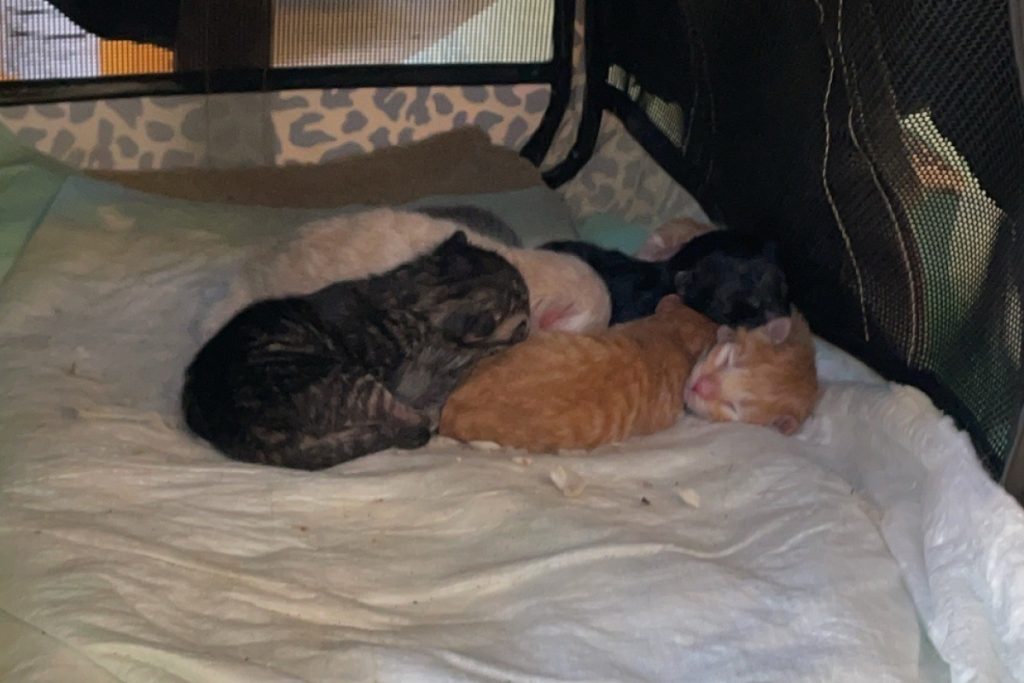
In the first 72 hours, the most important thing happening is invisible to you. Conan was establishing a scent environment in that carrier—her smell on the bedding, on the kittens, filling the space. For newborns who can’t see or hear yet, scent is their entire world. It tells them where safe is. It tells them where mama is. Disrupting that environment in the first days undoes something you can’t fix with good intentions.
I didn’t change the wetting pad for the first 48 hours. I wiped around the carrier carefully, kept things clean enough, and left the rest alone. I checked that all six were nursing; that was the main thing to confirm. Beyond that, Conan had it handled. My job was to not get in the way.
What newborns look like in this stage: small, eyes sealed shut, ears folded flat, almost entirely still except when nursing. They can’t regulate their own body temperature, which is why they pile together and why Conan’s presence is non-negotiable. If you’re caring for a litter without a mama cat, this is the stage that requires a heating pad and round-the-clock feeding. It’s intensive in a way that having a mama cat present completely changes.
Kitten development days 4 through 7: the first signs of individual personality
Even before their eyes opened I could tell them apart—not just by color but by behavior.
Duke was already the loudest and most insistent at the nursing pile. Sora, the only female, was right there competing with him. Clyde was physically bold even at this stage, repositioning aggressively. Ringo was quieter, steadier. Shaolin held his own despite being smaller. Houdini was already doing things his own way, while other siblings pushed toward the front of the carrier, he’d be attempting the same thing from the back.
Personality emerges earlier than you’d expect. By the end of the first week these were already six distinct animals with distinct approaches to the world, even without the ability to see it yet.
During this stage I started brief, gentle handling, picking each kitten up for a short time, keeping my movements slow and calm, putting them back exactly where I found them. This wasn’t arbitrary. The socialization window for kittens opens around week two and runs through week seven. What happens during that window shapes how they relate to humans for the rest of their lives. I was laying groundwork before the window officially opened.
Week two: eyes open, world begins
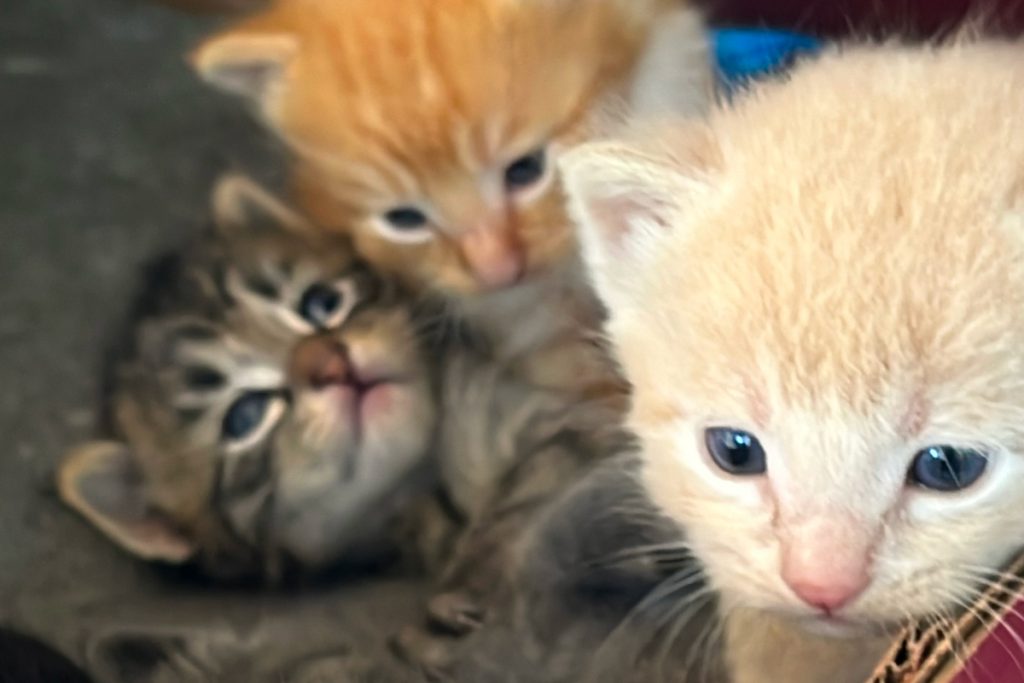
Kittens begin opening their eyes between days 7 and 14. It doesn’t happen all at once! It starts as a narrow squint and widens over several days. The eyes are blue at this stage regardless of what color they’ll eventually be, and vision is blurry. They’re not seeing the world clearly yet, but they’re starting to.
What changes immediately: response to presence. Before eye opening, the kittens responded primarily to sound and scent. After, they started tracking movement. The first time I leaned over the box and six pairs of blue eyes looked up at me was one of those moments I didn’t expect to feel the way it did.
Ears begin unfolding around the same time. Which means sound becomes a real part of their world; and human voices specifically start to register as familiar or unfamiliar. This is when my daily heelllooo started producing visible responses. They’d hear me and orient toward the sound. That recognition was built from weeks of consistent vocal presence before they could even process it properly.
Conan’s role shifts slightly in this week too. She’s still nursing, still the center of their world, but she starts taking longer breaks. She’d step out of the carrier, stretch, eat, rest nearby. The kittens would settle in her absence, which told me the scent environment was still doing its job even when she wasn’t physically present.
Week three: mobility, play, and the start of escape attempts
By week three the transformation is visible day to day. Kittens who were nearly immobile a week ago are now pulling themselves upright, taking unsteady steps, and beginning to interact with each other in ways that look unmistakably like play.
Clyde’s escape attempts started almost immediately after his eyes opened.
Sora was climbing the walls of the playpen by the end of week two—named for the Japanese word for sky because of exactly that behavior.
Duke was hogging space and announcing his presence loudly.
Houdini had figured out how to get out of the nesting box and—in a detail that still makes me laugh—figured out how to get back in, but revealed both secrets immediately.
This is the stage where socialization becomes active rather than passive. I let them out of the box periodically so they could explore, but they’d always crawl back in—for safety, for Conan’s scent, because the box was still home base even as the world got bigger. I handled them daily, longer now, letting them get used to being held by a known human. The ones who had been most handled in the early days were the most relaxed now. That foundation was paying off.
Duke, Clyde, Sora, and Houdini were the most actively playful with each other.
Ringo and Shaolin tended to play together, quieter and steadier than their siblings. Ringo became something of a resting spot—siblings would sleep on him or around him, which gave him an unintentional gravity that suited his calm personality perfectly.
Days 21 through 25: ready for the next step
By the end of week three and into day 25, all six kittens were responding to familiar human voices, calming when held correctly, and approaching known caregivers with curiosity rather than fear. They were beginning to chew, beginning to climb, increasingly aware of and interested in everything around them.
They also all responded to heelllooo in a high-pitched voice—they’d move toward the sound, orienting to it the way they had oriented to Conan’s presence from the beginning. That response was built over 25 days of consistent vocal presence. It wasn’t trained. It was accumulated.
At approximately 25 days, Conan and all six kittens were transferred to Tiny Kitten Coven in San Diego. The timing was deliberate, old enough to travel safely, young enough to continue the socialization process in a foster environment with people experienced in exactly this kind of care.
The foundation built in those 25 days: daily handling, vocal familiarity, a calm and consistent human presence during the critical window. It was the best thing I could give them before handing them off to a rescue. It followed them into foster care and it will follow them into their forever homes.
What this section of the site is for
The articles in this section go deeper into specific moments and milestones from those 25 days: what the first 24 hours actually looked like, how socialization works in practice, the difference between a shy kitten and a scared one, what it means when they start climbing everything.
If you’re watching a litter develop in real time and trying to understand what you’re seeing, start here and go deeper in the articles. Everything documented here was figured out by paying close attention to six specific kittens over 25 specific days. It’s not a textbook. It’s what actually happened.
I had been building a relationship with these kittens before they could see me. By the time their eyes opened, my voice was already familiar — already categorized as safe — before they ever saw my face.

The difference between a shy and a scared kitten
I didn’t know there was a difference between a shy and a scared kitten until I was watching it in real time across. This is how it unfolded.
Read Article
When kittens eyes open and what happens right after
I didn’t know what to expect when kittens eyes open. What I wasn’t prepared for was how much changed the moment it did.
Read Article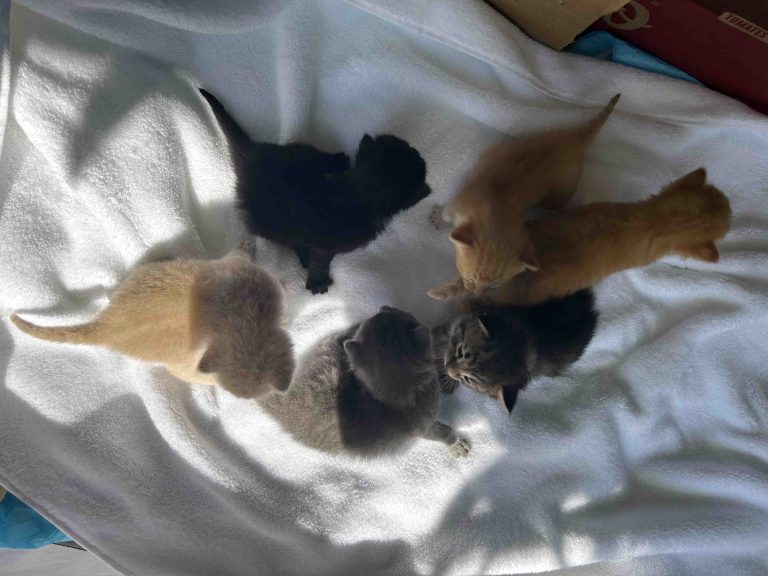
How Socialization Actually Works (From Someone Who Had No Idea)
I was just showing up every morning for the cat family. Here’s what I learned about how socialization actually works in the first weeks of life.
Read Article