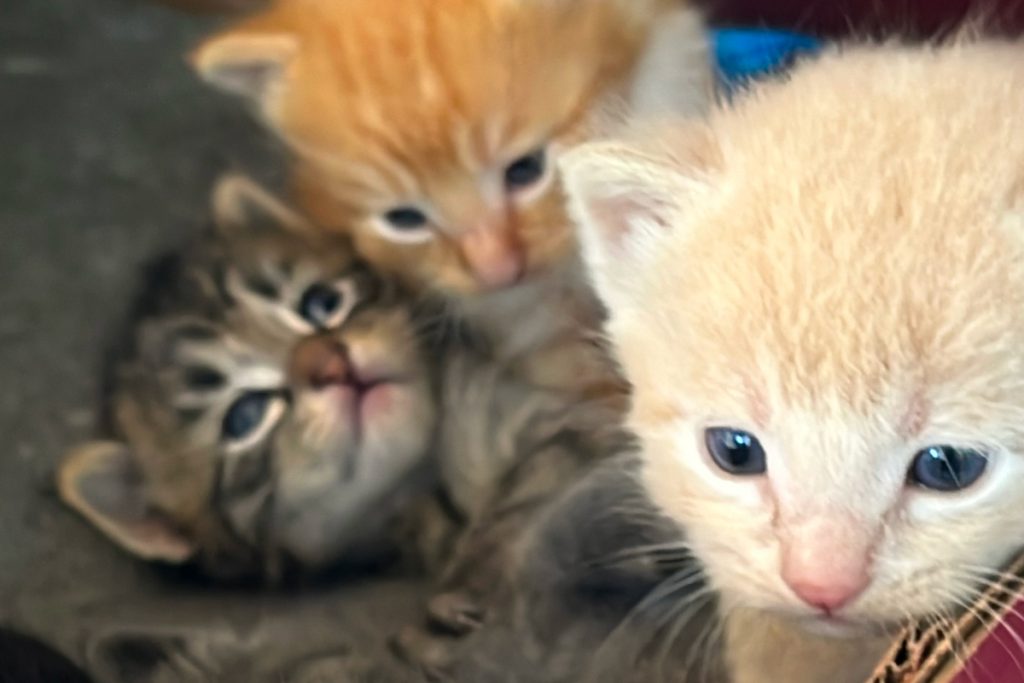
I didn’t know what to expect when kittens eyes open. I just knew it was coming; I’d read enough in those first days to know it would happen somewhere between one and two weeks, and that it happened gradually. What I wasn’t prepared for was how much changed the moment it did.
Not just for them. For me too.
When kittens eyes open & What it looks like
It doesn’t happen all at once and it doesn’t happen to all of them at the same time. It starts as a thin line, a narrow squint along the edge of the eye that widens slowly over several days. One kitten might be a day or two ahead of another. That’s completely normal.
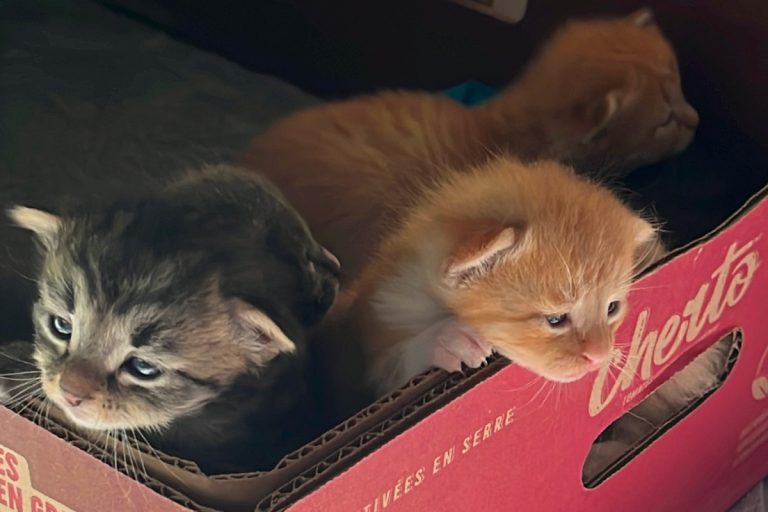
The eyes that appear are always blue at this stage, regardless of what color they’ll eventually become. Kitten eye color doesn’t stabilize until around two to three months old. The blue you see in the first weeks is not the blue they’ll have forever; it’s just where they start.
Vision at this stage is also blurry. They can detect light and movement but they’re not seeing the world in any detailed way yet. What’s happening is more significant than it might appear from the outside; a whole new sensory channel is coming online, slowly, alongside the hearing that was also just beginning to develop.
The moment I noticed
With Conan’s litter it started around day seven or eight with Duke, fitting, given his personality. I leaned over the box for the morning check and caught what looked like a reaction to my presence that was different from anything I’d seen before. Not sound-based, not scent-based. He was tracking me.
Over the next several days the rest followed. Ringo, Shaolin, Clyde, then Houdini and Sora. Each one in their own time, on their own schedule.
The first time all six pairs of eyes were open and looking up at me was one of those moments I genuinely didn’t expect to feel the way it did. Six small faces oriented in my direction. Six animals who had been developing in the dark now processing light, movement, the visual version of the world they’d been navigating by scent and sound for a week and a half.
I had been talking to them every morning. Saying heelllooo in that high-pitched voice that you develop when you spend enough time around small animals. Before their eyes opened they’d respond to the sound. After, they started tracking the source of it. That shift was subtle but unmistakable.
What changes immediately after
The first and most noticeable change is responsiveness. Before eye opening, kittens respond primarily to sound and scent. After, they start reacting to visual presence; movement near the box, a face leaning over them, a hand entering their space. They’re not seeing clearly yet but they’re registering that something is there.
The second change is the beginning of real interaction between siblings. When they couldn’t see each other, their awareness of their littermates was mostly about warmth and proximity. After eye opening, they start to actually look at each other. The play behaviors that develop in the following days, the pawing, the climbing, the chasing, have their roots in this moment. They’re seeing each other for the first time.
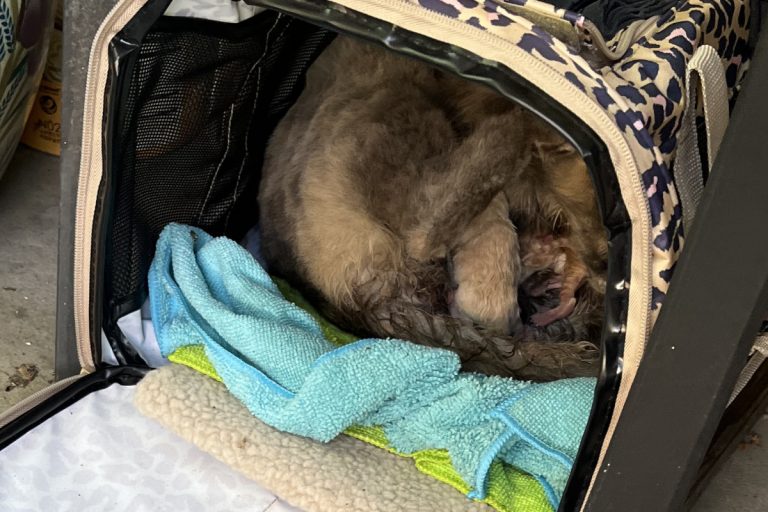
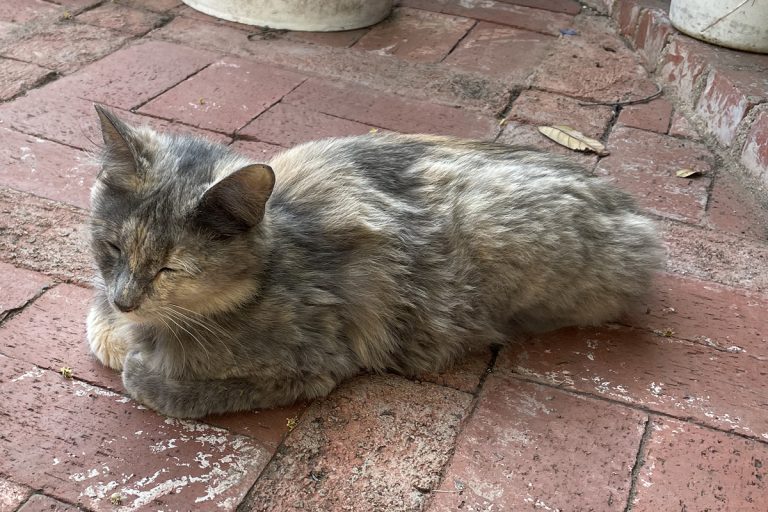
The third change is Conan’s behavior. With eyes open and the kittens becoming more mobile and aware, her nursing breaks start to lengthen slightly. She’s still present, still attentive, still the center of their world, but she starts to have a little more space. I watched her step out of the carrier and rest nearby while all six were awake and managing fine without her for a few minutes. That was new.
What you should and shouldn’t do at this stage
The temptation when eyes first open is to do more; to hold them more, to interact more, to test what they can now see. That instinct isn’t wrong but the timing matters.
The critical socialization window runs from roughly two to seven weeks. Eye opening marks the beginning of that window, not the peak of it. What you do in the days and weeks after eye opening shapes how these kittens relate to humans for the rest of their lives. Gentle, consistent, calm handling during this period is valuable. Overwhelming them with too much too fast is counterproductive.
What worked for me: brief handling sessions, the same calm voice every time, putting them back exactly where I found them, letting them come to awareness at their own pace. Houdini in particular needed more time than his siblings to feel comfortable with the visual presence of a human. Duke needed almost none. I followed each of them individually rather than treating them as a group with the same readiness.
What eye opening meant for socialization
Here is the thing I kept coming back to in those days: I had been building a relationship with these kittens before they could see me. Every morning I talked to them. Every morning I was a consistent sound in their environment. By the time their eyes opened, my voice was already familiar, already categorized as safe, before they ever saw my face.
That mattered. When they could finally look at me, they weren’t looking at a stranger. They were putting a visual to something they already knew.
That’s the argument for early and consistent vocal presence before eyes open. You’re not wasting your time talking to kittens who can’t see you. You’re building the foundation of something they’ll recognize when they finally can.