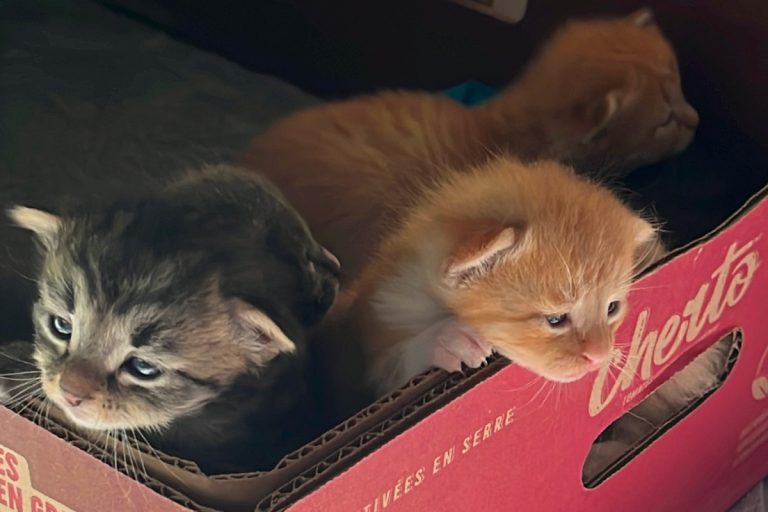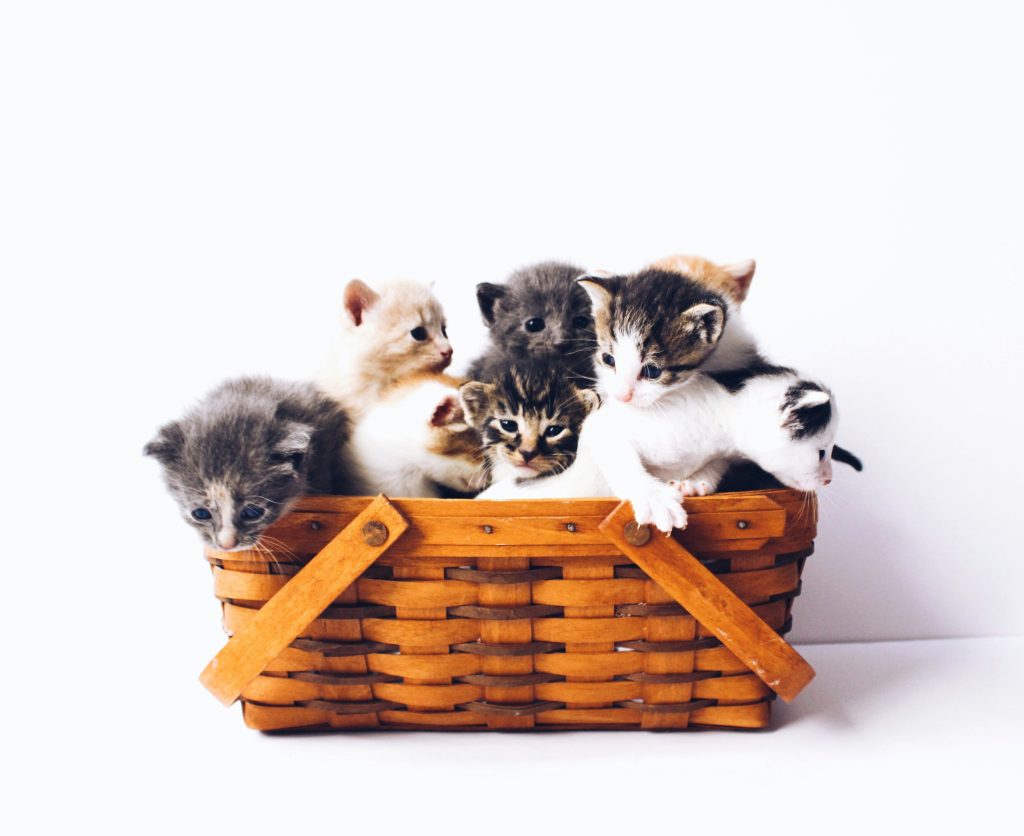
I didn’t know there was a difference between a shy and a scared kitten until I was watching it in real time across six kittens with six completely different responses to the same situation.
Same nest. Same mama. Same caregiver showing up every morning at the same time with the same voice. And still; six distinct reactions to being held, to being handled, to a human face leaning over the box.
Duke went immediately toward everything. Sora announced herself loudly. Clyde was already attempting to escape. And Houdini, gray, blue-eyed, the one I called the panther, hung back. Watched. Took his time.
I started wondering: is he scared? Or is he just like that?
The answer matters more than you’d think.
Why the difference between a shy and a scared kitten matters
If a kitten is scared, the response is to slow down, back off, reduce stimulation and let them regulate. You may be doing something that’s overwhelming them and needs to stop.
If a kitten is shy, the response is patience and consistency; showing up the same way every day until they decide you’re safe on their own timeline. Backing off too much actually works against you here, because shyness resolves through accumulated positive experience, not through absence.
Getting this wrong in either direction has real consequences during the socialization window. Push a scared kitten and you reinforce fear. Under-engage a shy kitten and you miss the window.
What scared looks like
A scared kitten is in a stress response. Their body is telling them there is a threat and they need to react to it.
Signs to watch for: flattened ears pressed tight against the head, a body that goes rigid when held rather than relaxing, hissing or spitting at a stimulus, attempting to bite when there’s no play context, a tail tucked hard against the body, eyes wide with dilated pupils, a posture that is low and compressed like they’re trying to make themselves smaller.
A scared kitten will often freeze first; that stillness isn’t calm, it’s a threat-response, and then try to escape if the threat doesn’t go away. If escape isn’t possible they may escalate to vocalizing or striking.
The trigger matters too. A scared reaction usually has a clear cause: a sudden movement, an unfamiliar sound, being picked up too abruptly, too many people in the space at once. Remove the trigger and a scared kitten can recover relatively quickly. The stress response isn’t their baseline; it’s a reaction.
What shy looks like
A shy kitten is cautious by temperament. They’re not in a stress response; they’re just taking longer to determine whether something is safe before they engage with it.
Houdini was shy. When I’d reach into the box, Duke and Sora would push forward. Houdini would move to the back, not in panic, not rigid, not vocalizing. Just watching. Assessing. When I held him he was actually the calmest of all of them, the most relaxed in human hands, once he’d decided to let me pick him up. Getting to that decision just took him longer than his siblings.
Signs of shyness versus fear: the body stays relatively soft even when the kitten is hanging back. Ears may be slightly back but not flat. There’s no hissing, no striking. The kitten may avoid eye contact or turn away but they’re not trying to escape; they’re just not engaging yet. If you sit quietly near a shy kitten without pushing for interaction, they’ll often approach on their own eventually. A scared kitten won’t; they need the stimulus removed before they’ll settle.
Shyness also tends to be consistent across situations. Houdini was always going to take more time than Duke. That was just who he was. Fear is more situational; a kitten who is usually confident can become scared in response to a specific stressor.
How I handled each one differently
With Duke, Sora, Clyde, the bold ones, the work was more about containing the energy than creating it. They were ready to engage before I was ready to engage with them. I let them set the pace in those early days because they had plenty.
With Houdini, and to a lesser degree Ringo and Shaolin, I did something different. I’d reach in, let him sniff my hand, and wait. If he moved away I didn’t follow. I’d come back the next day and do the same thing. Same hand. Same voice. Same unhurried energy. Over several days he started staying rather than moving away. Then he started sniffing longer. Then one morning he just let me pick him up and went completely still in my hands, not frozen, not tense, just calm. Like he’d finally decided I’d earned it.
That process took about a week of daily consistent contact. It would have taken longer or not happened at all if I’d pushed.
What this means if you’re socializing a litter
Not all kittens in the same litter will socialize at the same pace. Don’t compare them to each other as a measure of progress. A kitten who takes twice as long as their sibling to feel comfortable being held is not behind; they just have a different temperament.
The most important thing you can do with a shy kitten is be boring. Show up the same way every day. Let them move toward you rather than reaching for them. Keep handling sessions short and positive, ending before the kitten is ready to be done rather than after. That last point matters; you want the kitten to associate your presence with something that ends on their terms, not something that goes on until they’re uncomfortable.
And don’t mistake calm for scared. Houdini lying still in my hands was not a frozen fear response; it was a relaxed animal. Learning to read the body correctly is the whole game.
What happened to Houdini
By the time of the transfer at 25 days, Houdini was the most relaxed kitten in human hands of the entire litter. He’d lean into being held. He’d go still and settle. The gray panther who had spent the first week of his visible life watching from the back of the box had decided, on his own schedule, that humans were fine.
That didn’t come from pushing. It came from showing up the same way, day after day, until he was ready to agree. Now at the rescue, personalities may grow and change.