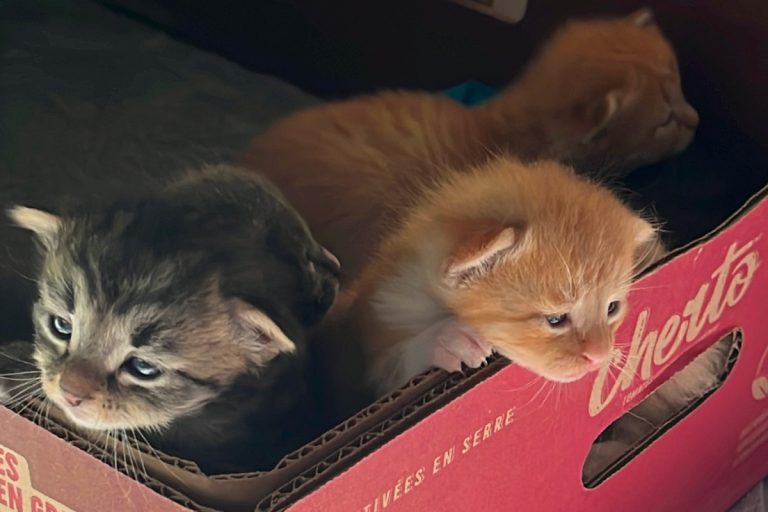
You found kittens. They’re small, they’re alone, and there’s no mama cat in sight. Your instinct is to help. That instinct comes from a good place. But before you touch those kittens, before you put them in a box, before you drive to the nearest shelter—stop! Read this first.
Because the most common mistake well-meaning people make with outdoor kittens is intervening when intervention is the wrong call. And in the case of very young kittens, the wrong call can cost them their lives.
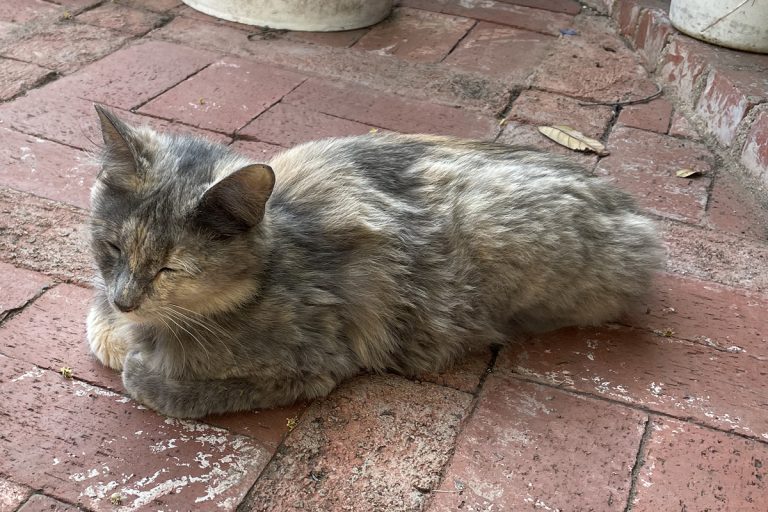
Mama cats leave. That’s normal.
This is the thing most people don’t know: mama cats do not stay with their kittens around the clock. They leave the nest regularly — to hunt, to eat, to rest, to self-regulate. A mama cat who has been nursing six kittens has significant caloric demands. She needs to eat. She needs breaks. She is not abandoning her litter by leaving it.
An absence of a few hours means nothing. Even longer absences can be normal depending on how far she needs to travel to find food. The nest being quiet, the kittens being still — that’s not distress. That’s kittens doing exactly what kittens do when mama isn’t there. They conserve heat, stay together, and wait.
If you find kittens outdoors and the mama cat is not visible, the default assumption should be: she is coming back. Not: she has abandoned them.
What to do before you touch those kittens
Watch. From a distance, without disturbing the area. Give it time — ideally several hours if the kittens seem stable. You can check back periodically without hovering over the nest, because your presence near it may actually keep the mama cat away. She’s watching you too.
While you wait, assess the kittens from a distance:
Signs the kittens are okay
- They’re huddled together and relatively still
- The nest looks undisturbed
- They’re not crying continuously
- They appear warm
Signs the kittens need help
- They’re cold to the touch or scattered away from each other
- They’ve been crying loudly and continuously for several hours
- The nest has been clearly disturbed or destroyed
- You have confirmed the mama cat is gone — you witnessed her death, she’s been trapped, or there is definitive evidence she cannot return
- The kittens appear injured or ill
If the kittens seem stable and mama has not returned after several hours of observation, that’s when you call a rescue — before you touch anything. Most reputable rescues will walk you through exactly what to look for and whether intervention is warranted. That phone call costs you nothing and could save the litter.
Why shelters are often not the right answer for neonatal kittens
This is hard to say because shelters do important work and the people in them often care deeply. But for very young kittens—under four weeks, eyes still closed or just opening, not yet eating solid food—a shelter environment is genuinely dangerous.
Neonatal kittens require round-the-clock feeding, warmth, and stimulation that most shelter facilities are not equipped to provide at scale. Survival rates for neonatal kittens in shelter environments are significantly lower than for kittens in foster care or with a nursing mama.
The better path for young kittens is a foster-based rescue that specializes in neonatal or at-risk cases. These organizations have the experience, the equipment, and the foster networks to give very young kittens a real chance.
If you bring kittens to a general shelter and they don’t have that capacity, you may be doing the opposite of what you intended.
What I did and what I got right by accident
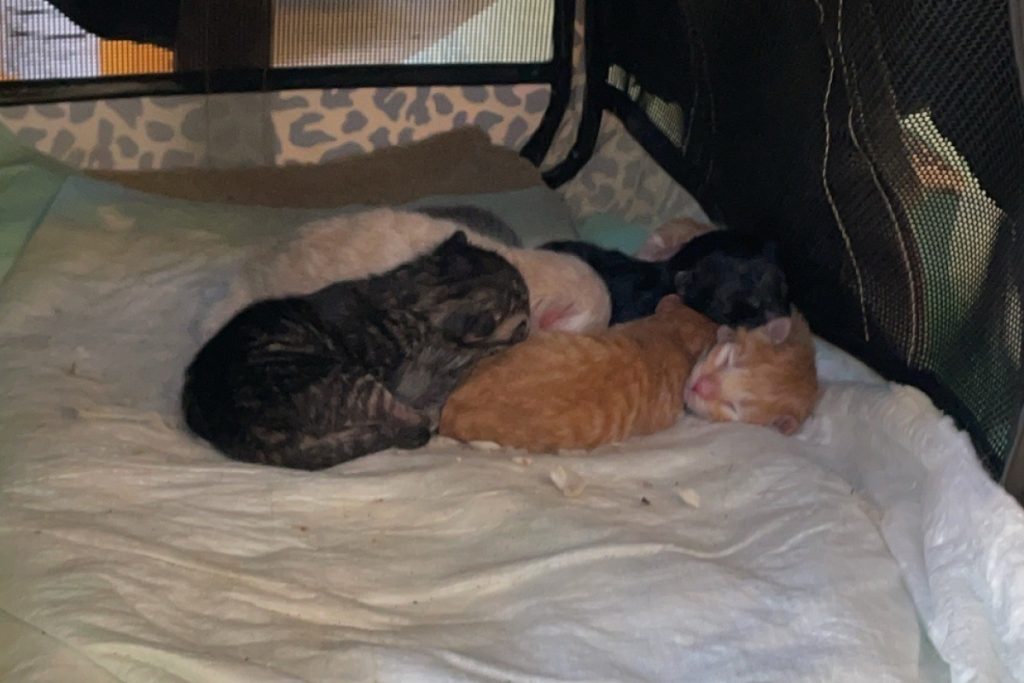
When Conan gave birth on February 28th, I did a lot of things right without knowing why they were right.
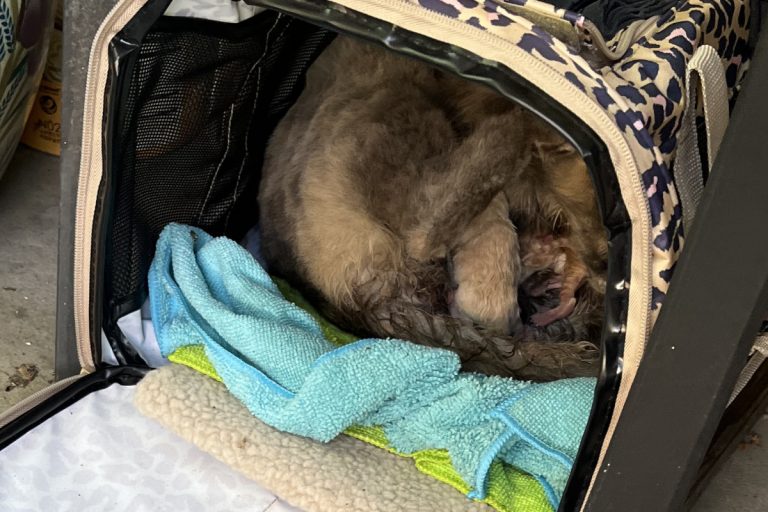
I didn’t change the wetting pad for 48 hours. I wiped around the carrier but left the nest itself undisturbed. I checked that all six were nursing but otherwise kept my hands mostly out of it. I was restrained not because I knew the science but because Conan made it clear with her body language that the space was hers and I should respect that.
What I didn’t know was that I was preserving the scent environment that those newborns depended on entirely for orientation. Mama’s scent on the bedding, on them, in that space — that’s what tells a neonatal kitten where safe is. Disrupting it in the first days is genuinely harmful even if everything looks clean and fine afterward.
I also didn’t panic when Conan left the nest. She’d step out to eat, stretch, rest near me. The kittens would settle in her absence. I learned quickly that her leaving was not a problem — it was just mama taking a break, which was her right and her need.
The kitten that looks abandoned probably isn’t
A specific scenario worth addressing: you find a single kitten, or a small group, in an unexpected place. No nest visible, no mama, no obvious siblings. Your assumption is abandonment.
More likely explanations: mama moved the litter and this one got left behind temporarily. The kitten wandered from the nest on its own. The nest is nearby but not visible to you. Mama is watching from a distance and will return when you leave.
Mama cats move their litters regularly — in response to perceived threats, changes in the environment, or simply because they’ve decided a better location exists. A kitten found alone is more often a kitten separated from a litter in transition than a kitten that has been abandoned.
Again: watch, wait, call a rescue before you intervene. The intervention that feels urgent is often the intervention that causes the most harm.
If you’ve already picked them up
It happens. You didn’t know. You acted on instinct and now you have kittens in a box and you’re reading this after the fact.
That’s okay. Here’s what to do:
If it’s been less than a few hours and you know where the nest is, you can return them. Mama will not reject kittens because they smell like you — that’s a myth. Put them back as close to how you found them as possible and watch from a distance.
If you can’t return them or you’re not sure it’s safe to do so, call a rescue immediately. Be honest about what happened and how old you think the kittens are. If they’re under four weeks old, emphasize that — the rescue will triage accordingly.
Keep them warm while you wait. A heating pad on low, wrapped in a towel so there’s a warm side and a cool side for the kittens to self-regulate. Do not try to feed them water or cow’s milk — both can be harmful. Kitten milk replacer is the right formula if feeding becomes necessary, but get rescue guidance before you attempt it.
The takeaway
Found kittens outdoors. No mama visible.
Watch first. Call a rescue second. Touch last.
That order matters more than anything else in this situation. The kittens that get the best outcomes are almost always the ones whose first human contact was a rescue professional on the phone walking someone through exactly what to look for — not a well-meaning person who moved too fast.
Your instinct to help is right. The timing and method of that help is what makes the difference.