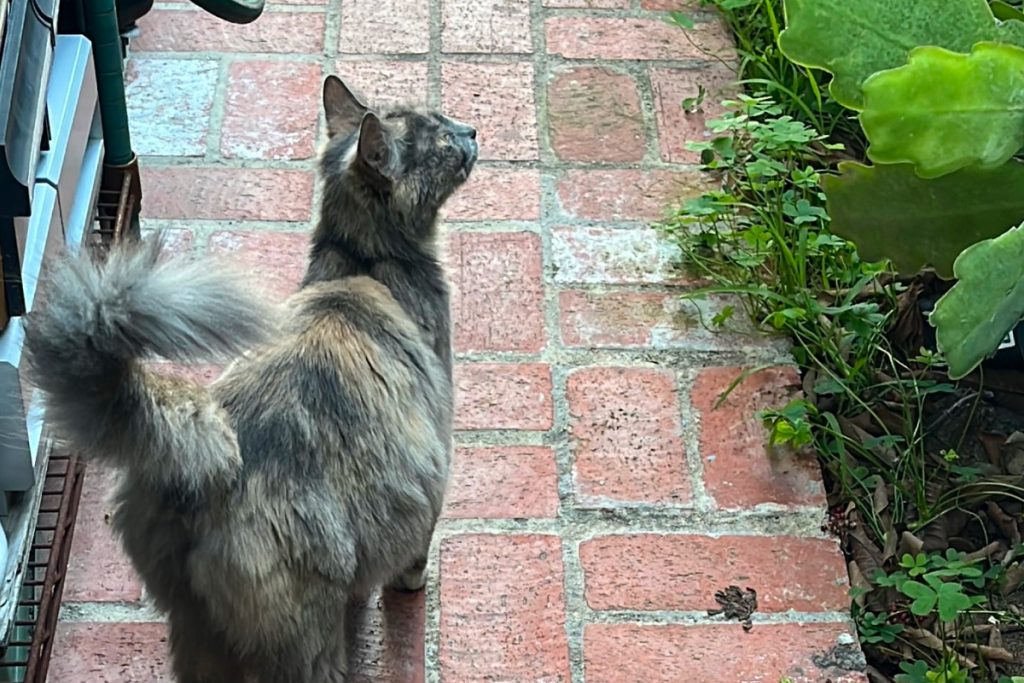
Conan did not choose a quiet life before she chose our backyard. Here’s how a community cat learns to handle noises.
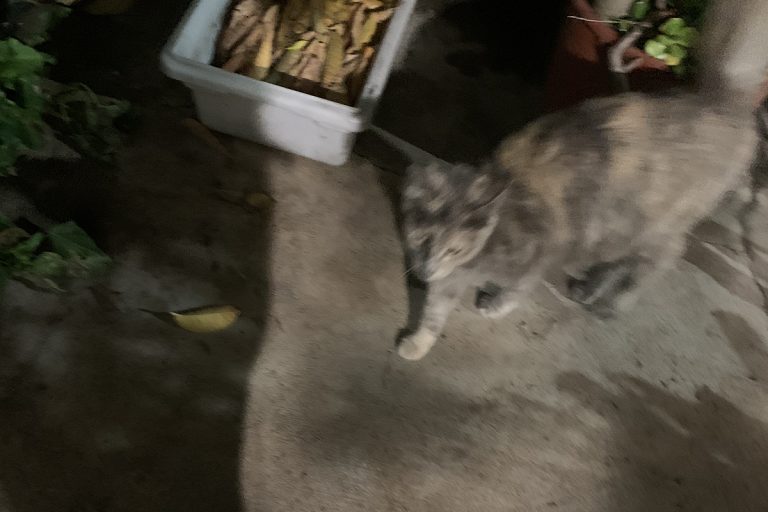
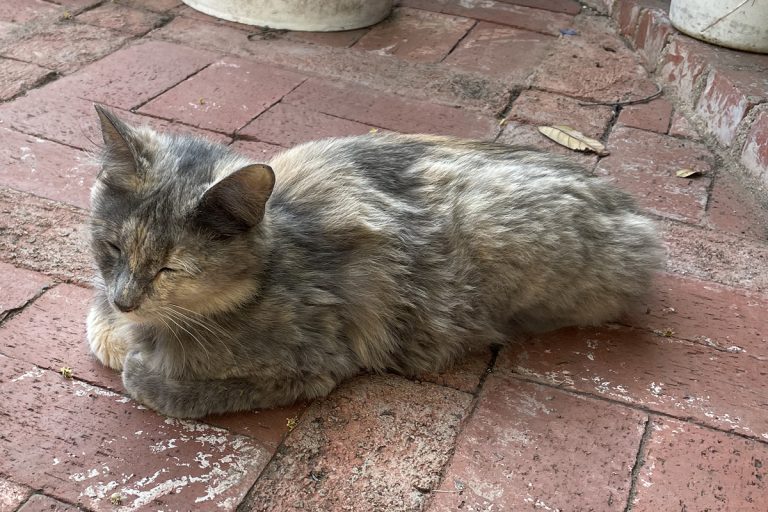
Community cats adapt to a lot: traffic, strangers, unpredictable schedules, weather. By the time I found her in February, she had already figured out how to exist in a world that wasn’t built with her comfort in mind. That included noise. Loud, sudden, sustained noise.
I know this because of the helicopter.
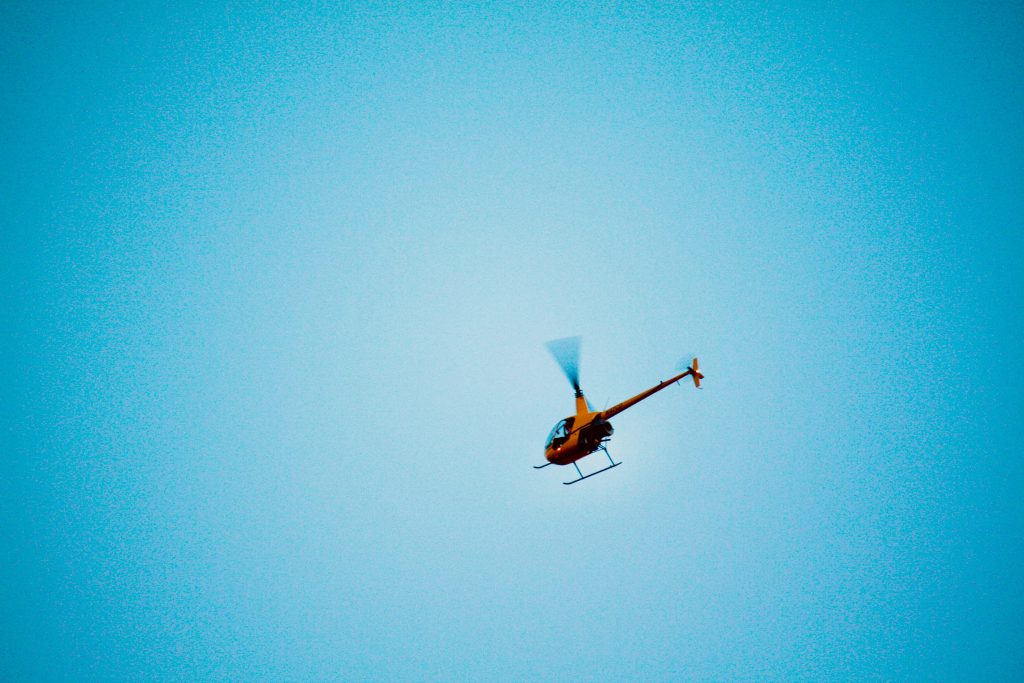
A thirty-minute flyby, low and loud, the kind that rattles windows and makes conversation impossible. I watched Conan during it. She was uncomfortable—ears working overtime, body low and alert—but she didn’t bolt. She stayed. She had learned, somewhere along the way, that some sounds were threats and some were just the world being loud for a while. Helicopters had apparently made it into the second category.
Loud gardening equipment was a different story.
A community cat learns to handle noises: The table incident
A few days after I found her, the gardeners came. Leaf blowers, trimmers, the full situation. I went to check on Conan and couldn’t find her anywhere obvious. Eventually I spotted her tucked into one of the leveled tables in the garden, completely still, waiting it out.
I crouched down and talked to her. Kept my voice calm, told her it was okay, that she could come out when she was ready. She didn’t make me wait long. She climbed out, shook herself off, and went back to her day.
What stayed with me was how quickly she responded to reassurance. She wasn’t feral; she wasn’t going to wait out the noise alone if a trusted voice was telling her she didn’t have to. That moment told me a lot about who she was and what she needed from me.
When the kittens arrived, I got scared
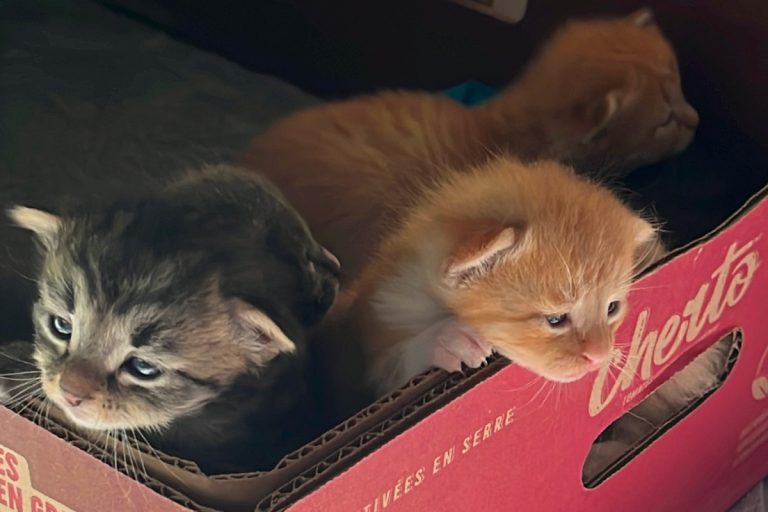
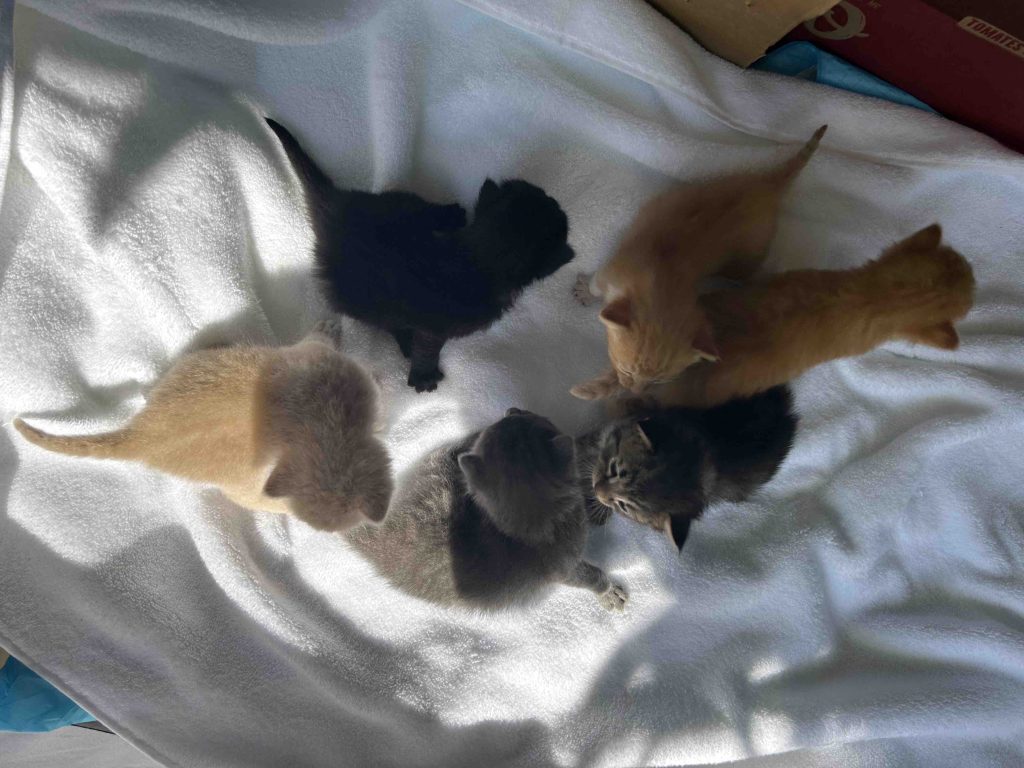
February 28th. Six kittens, a few days old, no eyes open yet, completely dependent on Conan for everything including their sense of whether the world was safe or dangerous.
And then a loud noise happened. I don’t remember exactly which one; what I remember is the fear that Conan would startle, run, and leave the kittens exposed in those critical first days. Newborns that young can’t regulate their own temperature. A mama cat who panics and abandons the nest, even briefly, is a real risk.
I didn’t have a science background to draw on. What I had was observation. And what I’d observed was this: Conan processed threat primarily through sound. When danger was loud and close and directly in front of her, she ran. When it was distant or muffled or something she’d heard before, she stayed.
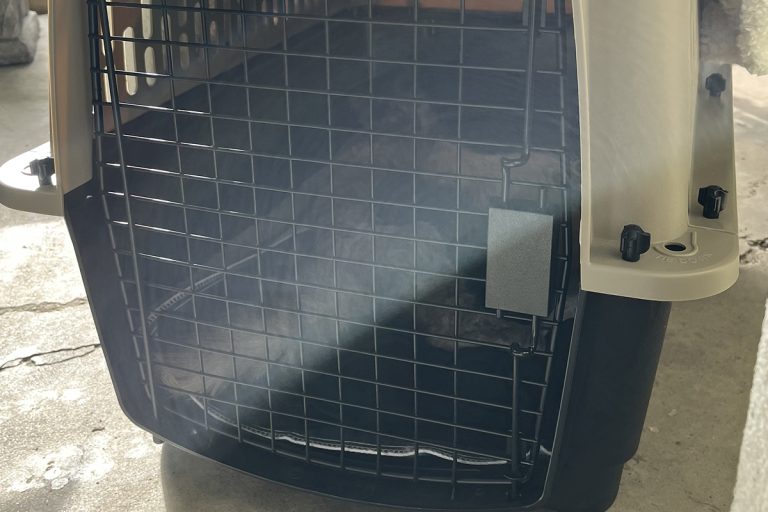
So I thought about the carrier.
What I actually did
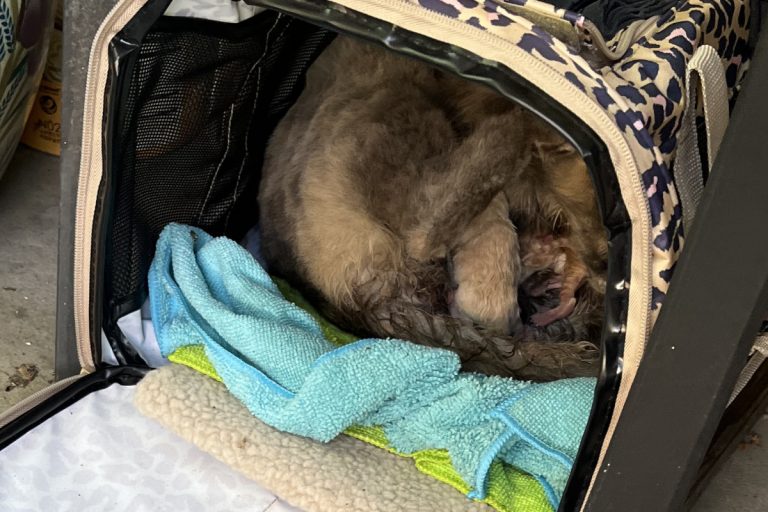
The carrier she’d chosen as her nesting spot was positioned in a way that left it exposed to the direction of whatever noise was coming. I moved it. Not dramatically—just repositioned it so the opening faced away from the sound source, toward a quieter corner.
Then I draped towels over it. Not completely sealed, she needed airflow and she needed to be able to get in and out freely. But enough to muffle the sound coming in, enough to make the space feel smaller and more enclosed. Den-like. The kind of space a cat instinctively feels safer in.
I had no idea if it would work. It was just logic applied to what I knew about her; she felt safer when sound was reduced and space felt contained. So I reduced the sound and contained the space.
It worked.
What happened during the helicopter flyby after the kittens were born
Thirty minutes of that same low sustained roar that I’d watched her tolerate before. I checked on her, half expecting to find an empty carrier.
Conan was nursing. Cleaning kittens between feeds. Completely present. Some of the kittens slept straight through it.
I stood there for a moment genuinely surprised. Then I thought, “Of course!” She’d already categorized helicopters as survivable. The towels and the repositioning had done enough to take the edge off the enclosed sound. And her kittens, a few days into their lives, were already picking up on her calmness the way kittens do. If mama isn’t panicking, there’s nothing to panic about.
They got that from her. The ability to sleep through a helicopter at three days old is not a skill you’re born with; it’s something you absorb from the animal keeping you warm.
What this taught me about community cats and noise
Community cats are not fragile. They’ve usually survived more than we give them credit for and developed coping strategies we don’t always see. Conan had a whole internal classification system for sounds—threats versus inconveniences—that she’d built long before I came along.
My job wasn’t to eliminate noise from her environment. That wasn’t possible. My job was to reduce the acute threat enough that she could access the resilience she already had.
A few practical things that helped, if you’re in a similar situation with a community cat or a mama and new litter:
Position the nest away from the primary direction of the sound source. Face the opening toward the quieter side of the space. Drape something over it, a towel, a blanket, to muffle without sealing. Don’t hover anxiously, because she will read your energy. Check in, reassure calmly if she seems unsettled, and then step back and let her do what she already knows how to do.
She adapted to a thirty-minute helicopter flyby while nursing six newborns. The least I could do was move the carrier and add a towel.